
Hand-Combed Camel Hair and 13.5-Micron Wool: Loro Piana's FW26 Collection Lands at Franco Uomo
Three new fabric books just landed at Franco Uomo, and they represent some of the finest cloth Loro Piana produces for the Fall/Winter 2026 season — from a cotton-cashmere blend built for color to a fiber so rare it's combed by hand from young camels roaming the North Himalayan desert.
We could talk about thread counts and micron counts all day. But the more important story is this: cloth this fine is only as good as the hands that cut and sew it. Before we walk through what's new, it's worth understanding why fabric of this caliber and a custom tailoring house go hand in hand — and why the two can't really be separated.
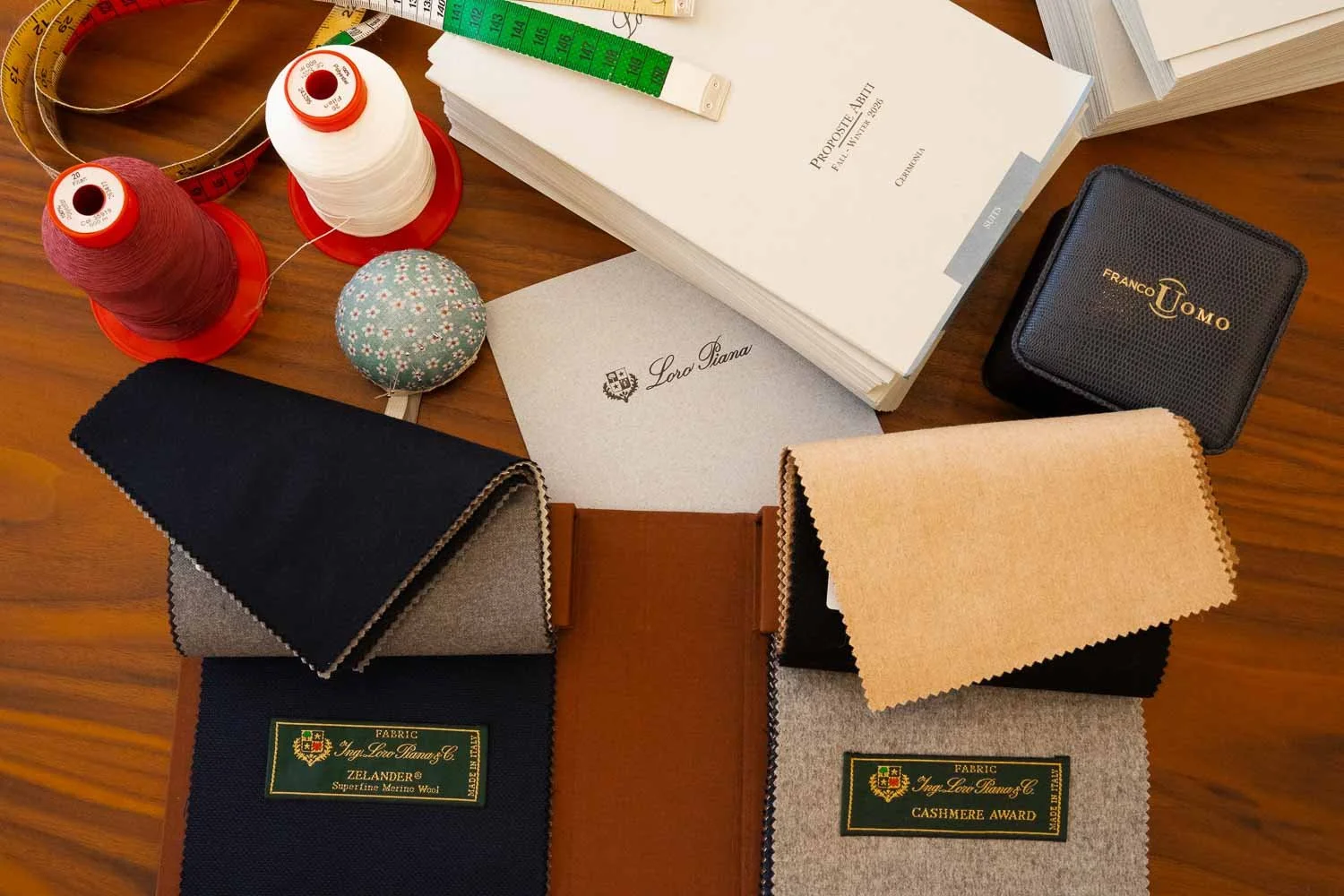
A World of Colours — Cotton & Cashmere
The first book to arrive is built around a simple idea: superior raw materials, deployed across an unusually wide color range. Two cotton-cashmere blends make up the collection — a lighter weight for warmer months and a heavier one for cooler weather — so the same fabric story carries across the full year rather than locking a client into a single season.
Cotton gives the cloth its structure and breathability. Cashmere softens the hand without adding bulk or weight. The result is a fabric that holds a crease and a shape the way a good suit should, without ever feeling stiff against the body.
What sets this collection apart is the sheer range of color — vivid, contemporary tones sitting alongside deep neutrals and classics, all built to support both a clean monochromatic look and spezzato dressing, the Italian approach to pairing a jacket and trouser in two complementary but unmatched tones. It's a fabric book built for a client who wants to build a wardrobe, not just order a single suit.
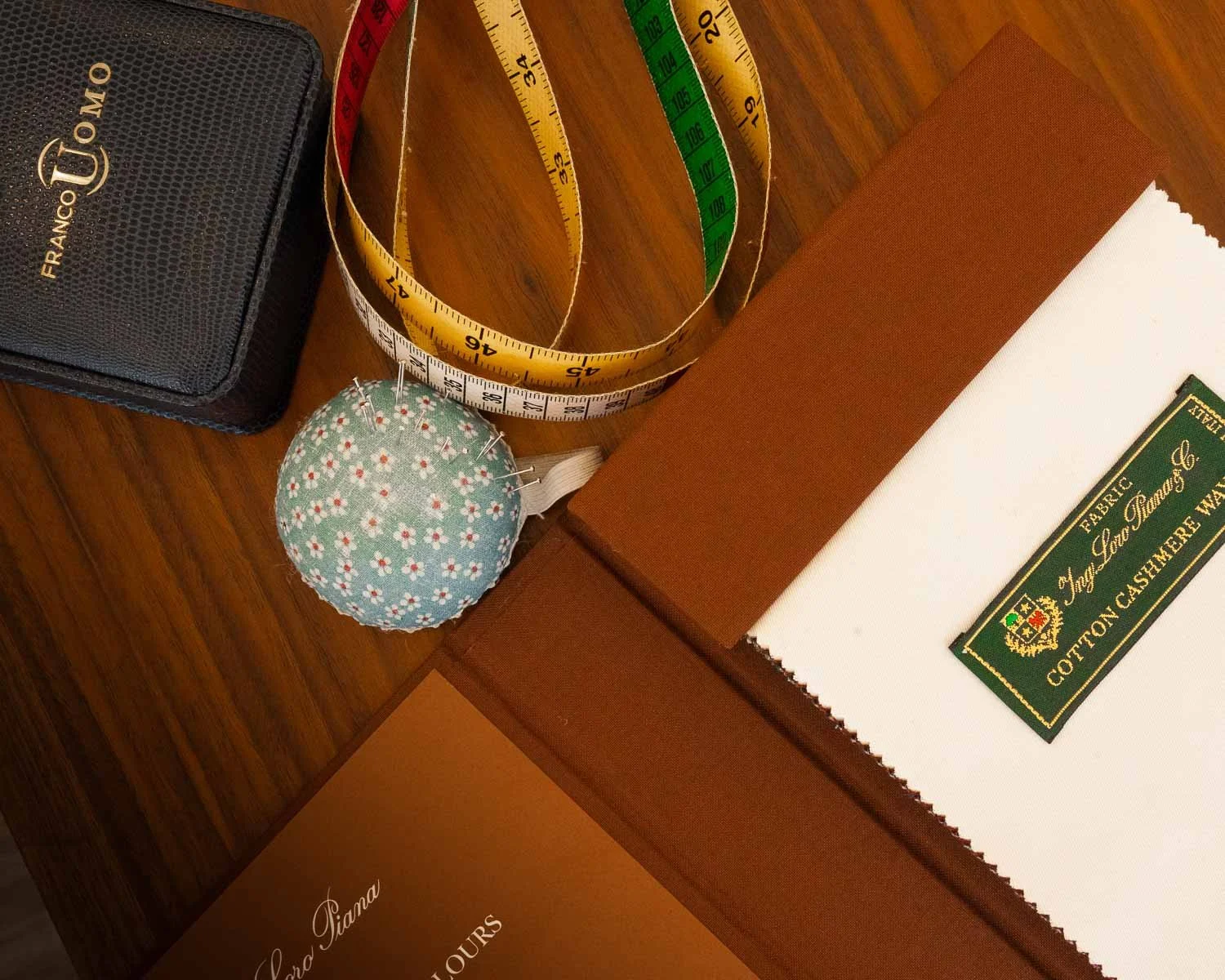
Jersey — Featuring Cashmere Award and Zelander
The second book introduces something genuinely different: Jersey. Unlike a traditional woven suiting cloth, Jersey is knit from a single strand of yarn, which is what gives it a stretch and drape that woven fabric simply can't replicate. It moves with the body instead of against it — which is exactly why it's become the foundation for a new category of tailoring: the sweater-jacket.
Within this book sit two distinct fiber stories:
Cashmere Award carries the name of Loro Piana's own internal grading program — a recognition the mill established to identify the finest raw cashmere fiber bales sourced each year. The fabrics in this book range from pure 100% cashmere down to a refined 48% cashmere-silk blend, offered in a foundational range of wearable, essential tones. This is cashmere built for comfort first: a jacket that feels like your favorite sweater but tailors like a garment meant to be worn out into the world.
Zelander takes the same knit construction in a sportier direction — superfine merino wool built for a more active, on-the-go version of casual luxury. Still soft, still refined, but with a bit more resilience built in for a client who wants comfort without sacrificing polish.
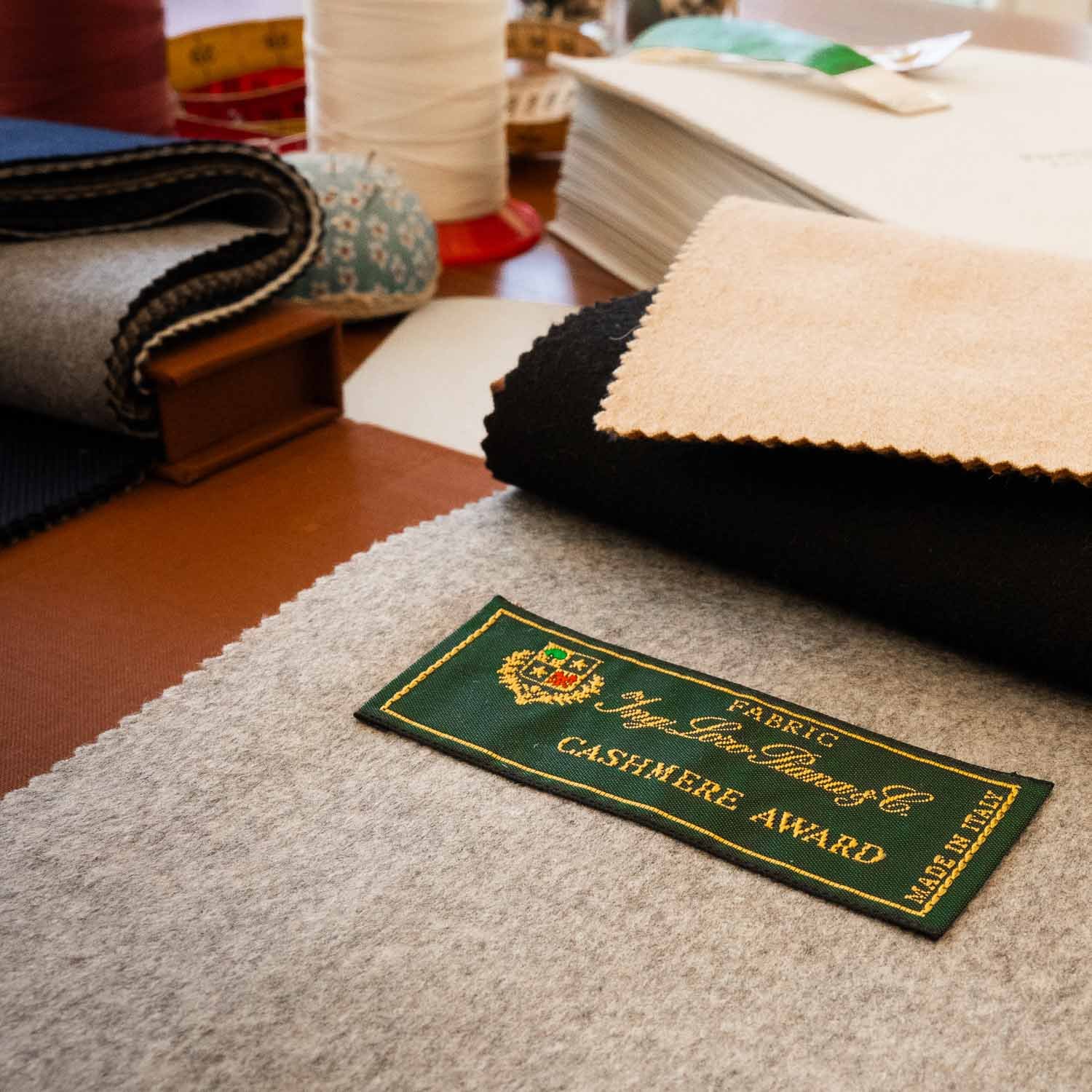
Blazers — Featuring Super 200 and Bactrian Baby Camel Hair
The third book is dedicated entirely to blazers, built specifically for spezzato dressing — beaver and shaved finishes, in melange and solid tones, across a wide weight range that covers any season. This is the book we reach for when a client wants a jacket that stands entirely on its own.
Two collections inside it push into genuinely rare territory:
Super 200 refers to the fineness of the wool itself — in wool grading, "Super" numbers and micron counts both measure how fine a fiber is, and the higher the Super number, the finer and softer the cloth. At 13.5 microns, this 100% merino wool sits among the finest commercially available anywhere in the world — well beyond what most tailoring houses ever have access to.
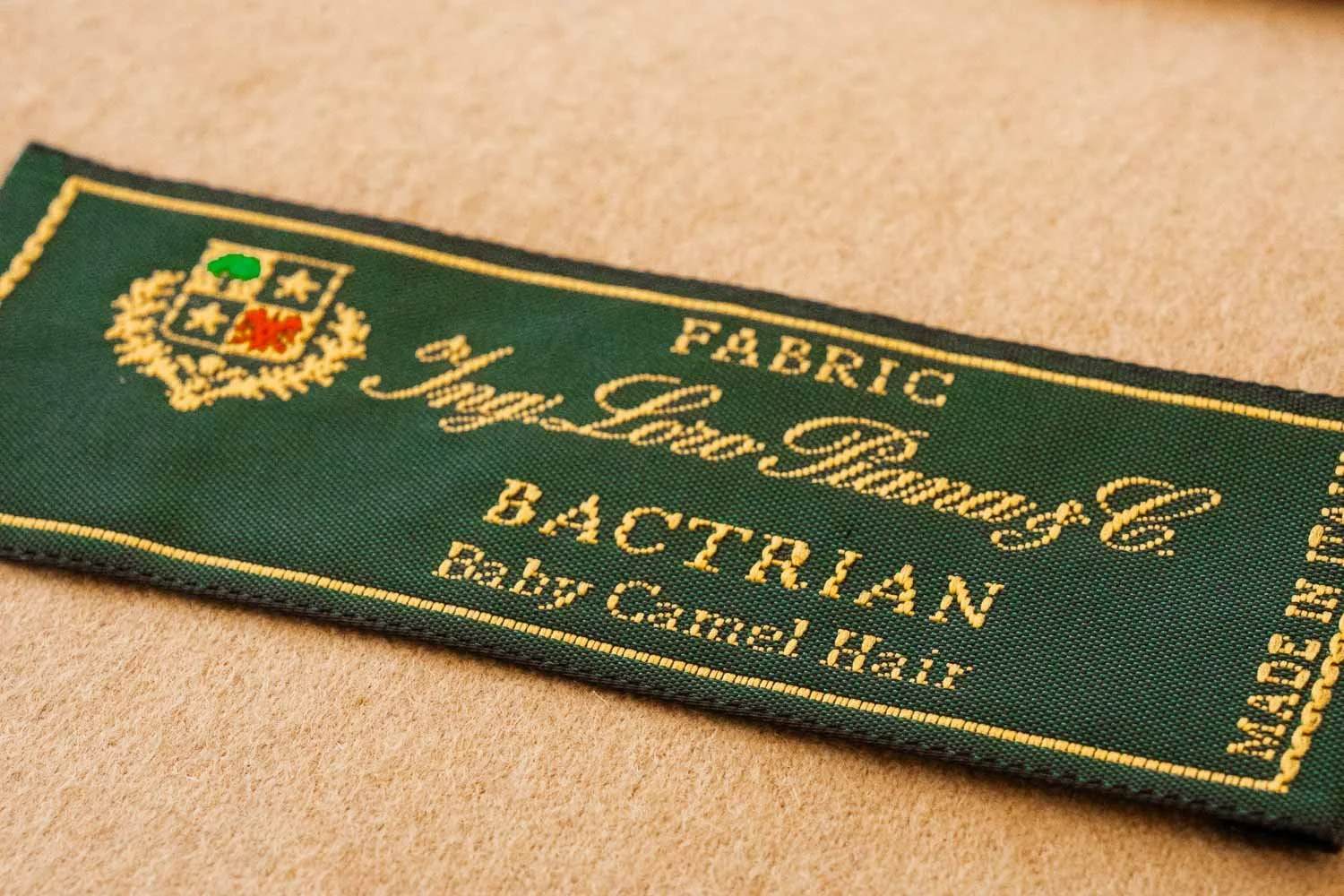
Bactrian Baby Camel Hair is rarer still. This fiber is combed — never shorn — from the ultra-fine undercoat of young Bactrian camels native to Ladakh, in the North Himalayan desert, and Mongolia. It's one of the scarcest materials Loro Piana works with anywhere in its catalog, delivering warmth comparable to the finest cashmere with meaningfully more durability. A jacket from this cloth isn't just well-made — it's genuinely rare.
Why Fabric Like This Belongs With a Custom Tailor — and Nowhere Else
Here's the part that matters most. A 13.5-micron wool or a hand-combed baby camel hair fiber is not forgiving cloth. It doesn't hide a bad cut. It doesn't survive a rushed alteration. Fabric this fine rewards precision and punishes shortcuts — which is exactly why it should never end up in the hands of anyone but a tailor who builds a garment from scratch, around an individual's measurements, from the first cut to the final stitch.
This is the difference between custom tailoring and everything else on the market:
Off-the-rack and made-to-measure both start from an existing pattern. A block gets adjusted to fit — but the fundamental shape, the drape, the way the cloth is meant to move, was designed for an average body, not the one standing in front of the tailor. Fine cloth deserves better than an adjustment; it deserves a pattern built for the individual from the start.
Delicate, rare fiber requires a tailor's full attention during construction — not a factory line. Canvassing, interfacing, and hand-finishing all have to be matched to the specific cloth being used. A wool at 13.5 microns behaves differently under a needle than a standard business-weight wool. A knit Jersey behaves differently than a woven suiting cloth. Getting that wrong doesn't just look worse — it can permanently damage cloth this expensive and this rare.
A custom house builds one relationship with one client, garment by garment — not thousands of interchangeable orders. When a client sits down for a fitting on a Bactrian baby camel hair jacket, the stakes are different than they are for a standard commission. Franco Uomo's process exists specifically for that moment: full creative control over fabric, cut, and construction, with a tailoring team that works exclusively on garments it builds from the ground up — never on outside alterations, never on a factory pattern.
Loro Piana produces some of the finest cloth in the world. What happens to it after it leaves the mill is what separates a good suit from a truly exceptional one.
All three collections are now available for consultation at both Franco Uomo locations — Santana Row in San Jose and Stanford Shopping Center in Palo Alto. Book a style consultation to see the fabrics in person and begin a custom commission.